

You just finished a heavy set of squats and your heart is pounding. Do you get back under the bar after one minute, or do you wait three? Rest between sets seems like a detail, but it decides how many reps you get in your next set and therefore how much total work your muscles do.
In this article you'll learn how long to rest for muscle growth and for strength, why it differs per exercise and how to save time without leaving results on the table.
Why rest between sets matters
During a hard set your muscles get temporarily fatigued. During the rest period they recover a large part of that fatigue. Rest too briefly and you'll get fewer reps with the same weight in your next set. Rest enough and you can keep your quality high.
That matters because muscle growth and strength gains are closely linked to your total training volume: the number of hard sets and reps you do per week. Read more about volume in our article on sets per muscle group per week.
What does research say about rest time?
For a long time people thought short breaks of 30 to 60 seconds were best for muscle growth, because you feel a big pump. Newer research adds nuance to that picture.
- In a well-known study by Schoenfeld and colleagues (2016), trained men trained for eight weeks with 1 or 3 minutes of rest between sets. The group resting 3 minutes gained more muscle and more strength.
- A meta-analysis by Singer and colleagues (2024) found a small benefit for rest periods longer than 60 seconds, but little extra gain beyond roughly 90 seconds.
The takeaway: very short breaks are rarely ideal, and endless resting isn't necessary either. For most people the sweet spot is somewhere between 1.5 and 3 minutes, depending on the exercise.

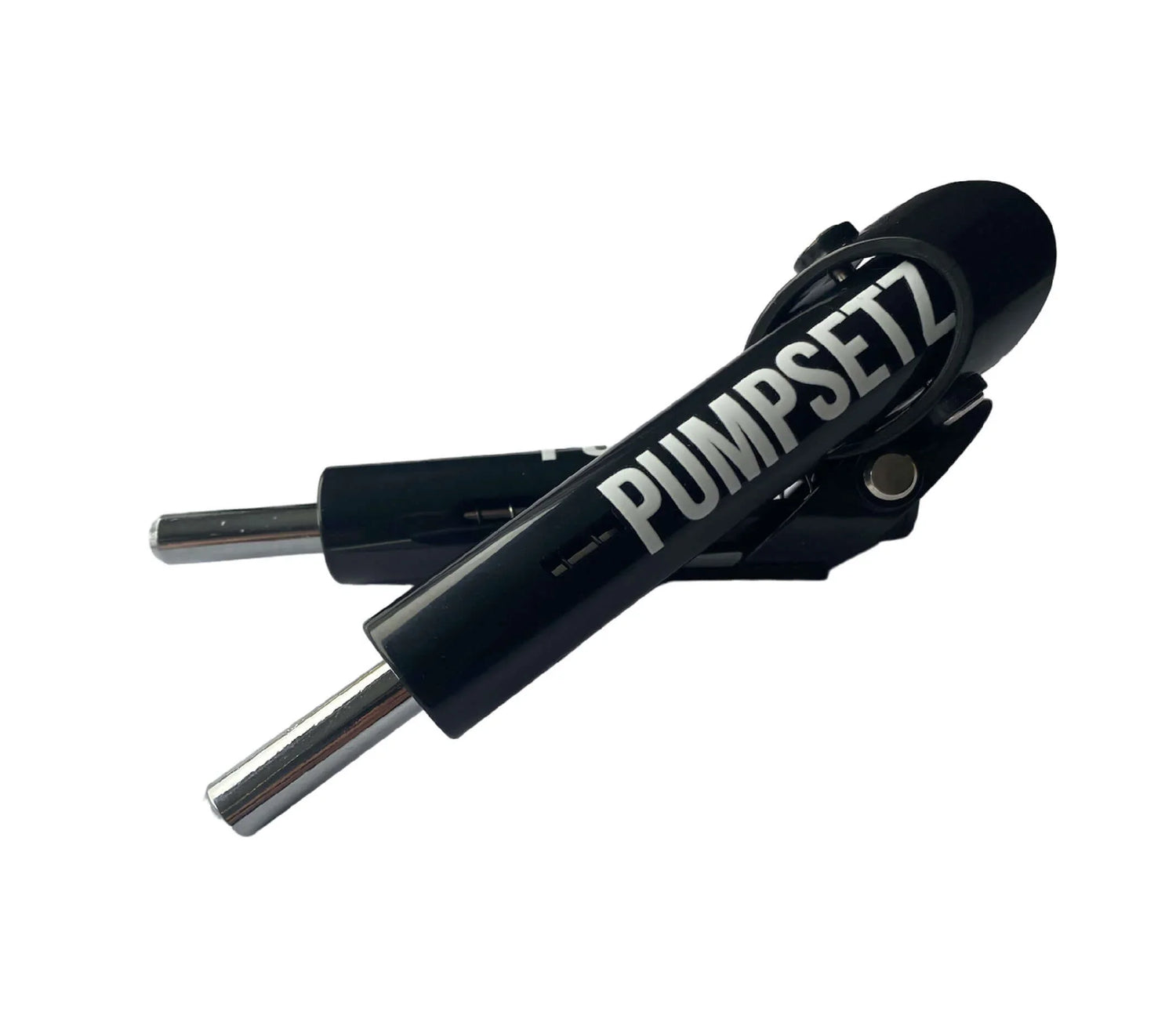
DROPSET PINS
€19,95
Dropsets on machines, without a training partner and without the hassle. With Gymsetz Dropset Pins you drop the weight on cable and stack machines in one...
View productRest time per goal and exercise
The heavier and bigger the exercise, the more rest you usually need. A set of heavy deadlifts demands much more from your body than a set of bicep curls. The table below gives a practical starting point.
| Type of exercise | Example | Reps | Rest time |
|---|---|---|---|
| Heavy compound exercise | Squat, deadlift, bench press | 3 to 6 | 3 to 5 minutes |
| Compound exercise for muscle growth | Barbell row, lat pulldown | 6 to 12 | 2 to 3 minutes |
| Isolation exercise | Bicep curl, cable fly | 10 to 15 | 1 to 2 minutes |
See this as a guideline. Once your breathing and focus are back and you feel you can perform the next set well, you're usually ready to go.
4 ways to use your rest time wisely
Use a timer
Without a timer you often misjudge your rest. You check your phone for a moment and suddenly five minutes have passed. A simple timer keeps your workout tight and comparable from week to week.
Match your rest to the exercise
Give your heavy compound exercises at the start of your workout the most rest and keep breaks shorter for isolation work at the end.
Keep moving lightly
Walk around calmly or briefly stretch the muscles you're not training. Don't sit down and scroll until you cool off and lose your focus.
Prepare your next set
Use the last seconds of your break to set up your grip, posture and breathing. That way you start every set focused.
Tip
Write down your rest time next to your weight and reps. If you get more reps next week with the same rest, you know for sure you've really gotten stronger.
Short on time? Train more efficiently
Long breaks make a workout longer. If you only have an hour, there are ways to save time without sacrificing your heavy sets.
- Supersets with opposing muscle groups: for example, pair a pushing exercise with a pulling exercise. While one muscle group rests, the other works. Read more in training with supersets.
- Dropsets on isolation exercises: you lower the weight right away and keep going without a break. That way you do a lot of work in a short time. Read the difference with other techniques in dropset vs superset vs rest-pause.
On a cable or stack machine you can do a dropset faster with the PUMPSETZ Dropset Pins: you set your weights up in advance and just pull out a pin after your set, so you don't lose time switching.
Example: rest times in a push workout
Here's how a push workout could look with rest time that adapts to the exercise. Adjust sets and reps to your own level.
| Exercise | Sets | Reps | Rest |
|---|---|---|---|
| Bench press | 4 | 5 to 6 | 3 minutes |
| Overhead press | 3 | 8 to 10 | 2 minutes |
| Triceps pushdown (last set as a dropset) | 3 | 10 to 12 | 1.5 minutes |
Want to improve your technique on the big pressing lifts? Check out our guides on the bench press and the overhead press.
Tip
If you feel dizzy or nauseous during your rest, or your breathing recovers unusually poorly, stop training and talk to a doctor.
Frequently asked questions about rest between sets
How long should I rest between sets for muscle growth?
For most exercises 1.5 to 3 minutes works well. Heavy compound exercises can take longer, while 1 to 2 minutes is often enough for isolation exercises.
Is 1 minute of rest too short?
For isolation exercises 1 minute can be fine. On heavy compound exercises such a short break usually means fewer reps, which costs you total volume.
Do you rest longer when training for strength?
Yes. With heavy, low-rep sets, such as squats or deadlifts, many lifters choose 3 to 5 minutes of rest so they can perform every set at full strength.
Does rest count during a dropset?
Within a dropset you don't rest: you lower the weight and keep going right away. After the complete dropset you take your normal rest break.
Summary
The ideal rest between sets depends on the exercise and your goal. Rest 3 to 5 minutes on heavy compound exercises, 2 to 3 minutes on compound work for muscle growth and 1 to 2 minutes on isolation exercises. Use a timer, write down your rest and save time with supersets and dropsets where it fits. Find more articles and tools in the Fitness Hub.
Read next
View
Warm-up for strength training: how to prepare for heavy sets
How do you warm up properly for strength training? Learn how to warm up...
View
Training to failure: how close to failure should you train for muscle growth?
Should you take every set to failure? Learn what research says, what RIR means...
View
Sets per muscle group per week: how to plan your training volume
How many sets per muscle group per week do you need to build muscle?...
Ready to train stronger?
Discover all guides, programs and tools in the Fitness Hub.