

You've been training consistently for months, yet you're still benching the same weight as last spring. Sound familiar? Chances are you don't need to train harder, but smarter. The principle that makes the difference is called progressive overload: making your training a little harder step by step, so your body has a reason to adapt.
In this article you'll learn what progressive overload is, the ways to apply it and how to track it without getting ahead of yourself.
What is progressive overload?
Progressive overload means gradually increasing the load of your training. Your body adapts to what you ask of it. If you do exactly the same thing week in, week out, there's eventually little new stimulus left. Ask for just a bit more each time and you keep challenging your muscles to get stronger and bigger.
Important
"More" doesn't only mean more kilos on the bar. There are several dials you can turn, and that variety is exactly what makes the principle useful for beginners and advanced lifters alike.
6 ways to apply progressive overload
More weight
The best-known option. If you hit all your planned reps on an exercise with good technique, increase the weight by a small step next time. On big lifts like the squat and deadlift that step can be a bit larger than on small exercises like lateral raises. Not sure where you stand? Use our 1RM calculator to pick a suitable working weight.
More reps
Can't increase the weight yet? Add reps. A popular approach is double progression: you choose a range, for example 8 to 12 reps. Once you hit 12 reps in all sets, you increase the weight and start again at the bottom of the range.
More sets
An extra set per exercise increases your total training volume. Do this gradually and not on every exercise at once, or your recovery will fall behind.
Better technique and control
The same weight with a fuller range of motion, a controlled eccentric phase (the lowering) or a short pause at the bottom is progress too. Often the smartest first step, because it strengthens your foundation.
Shorter rest or more density
The same amount of work in less time makes a session harder. Supersets fit well here. Read dropset vs superset vs rest-pause to see which technique works when.
Intensity techniques
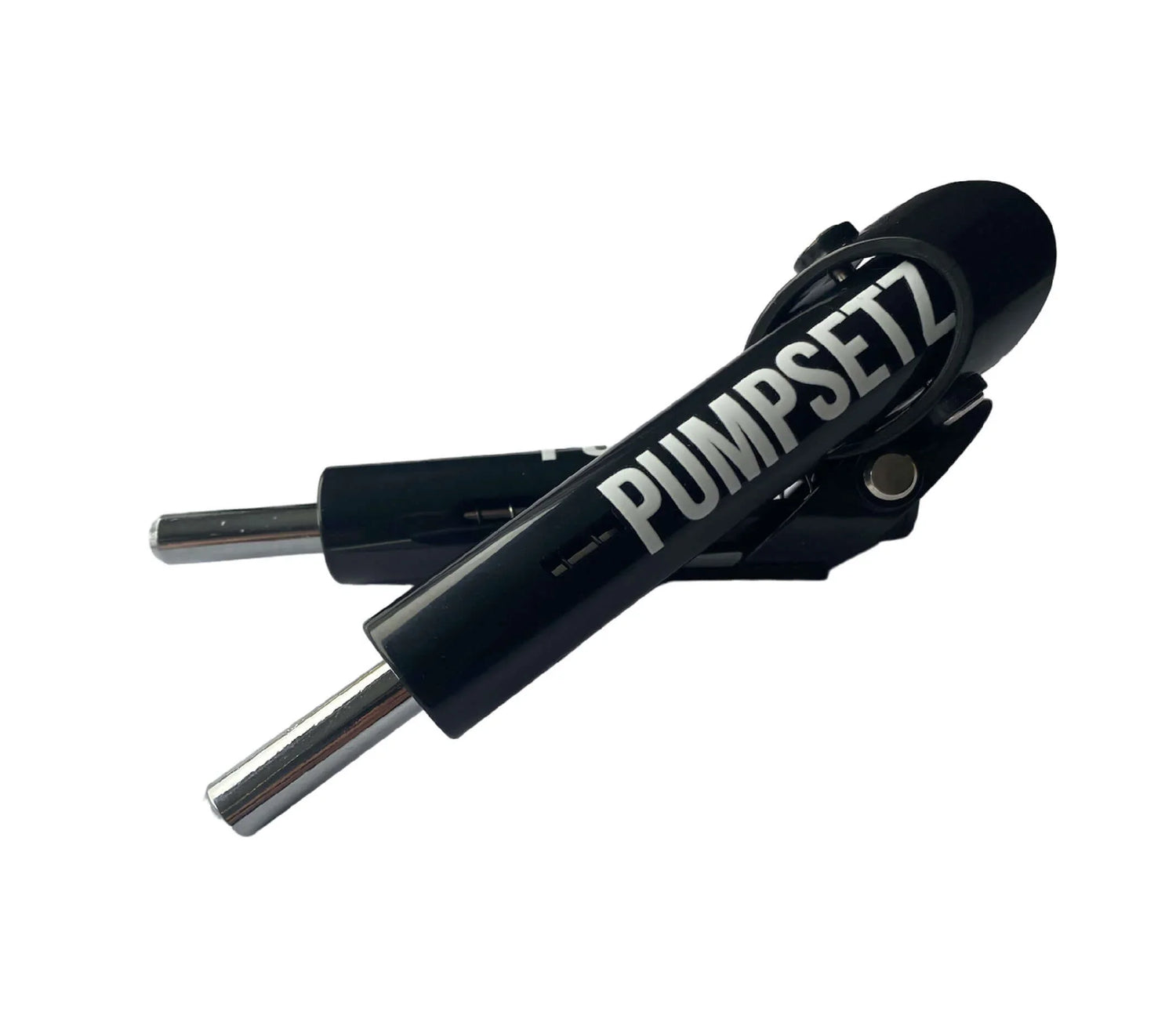
Stuck on a machine exercise? A dropset can help you do extra work after you've completed your reps with the starting weight. With Gymsetz Dropset Pins you lower the weight on a stack machine without getting up. Use it as an addition, not a replacement for a good programme. Need inspiration? Check out our dropset training programme.
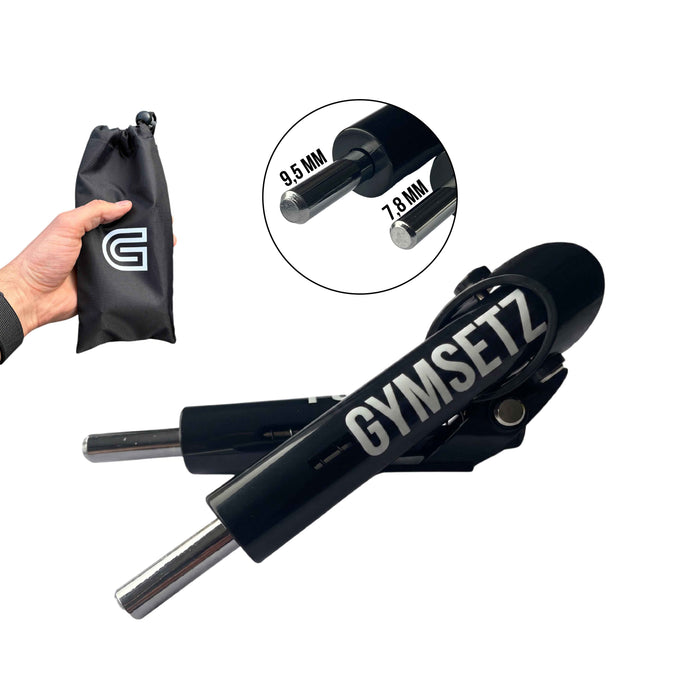
GYM ESSENTIALS SET
€49,00
Everything you need for heavy training, in one set. With the Gym Essentials Set you get the three Gymsetz favourites together and pay €49 instead of...
View productHow to track your progress
Progressive overload only works if you know what you did last time. Don't rely on your memory for that.
- Log every session: exercise, weight, sets and reps. A notes app or a simple notebook is enough.
- Look back before you start: decide per exercise what you're aiming for this session, for example one more rep or a small weight jump.
- Keep exercises the same for a while: if you change exercises every week, it's hard to compare progress.
- Pay attention to how hard it feels: after each set, estimate how many more reps you could have done. That way you also see progress when the weight on paper stays the same.
Tip
Turn only one dial per exercise at a time: either more weight, more reps or an extra set. That way you see exactly what works.
When your grip or wrists hold you back
With heavier pulling and pressing exercises, many lifters notice that it's not the target muscle but something else that gives out first. On deadlifts, rows and shrugs that's often your grip: the bar slips before your back or legs are really tired. So train your grip separately too (tips in improving your deadlift grip) and consider lifting straps for your heaviest sets, so you train the muscles you actually want to train.
On heavy presses like the bench press and overhead press, wrist wraps can give your wrists extra support. They're not a fix for pain or poor technique, but they are a practical tool as you move towards heavier weights. Not sure? Read lifting straps vs wrist wraps.
Common progressive overload mistakes
Steps that are too big
Adding a lot of weight every week seems fast, but often leads to breaking technique and stalling. Small, achievable steps keep the process going.
Sacrificing technique for kilos
A rep with bad form isn't real progress. Only increase once the movement is right.
Increasing everything at once
More weight, more sets and shorter rest in the same week is too much of a good thing. Pick one dial per exercise.
Forgetting recovery
You get stronger between sessions. Sleep, nutrition and rest days help decide whether you make progress. More in sleep and muscle growth and nutrition for muscle building.
Expecting linear growth
After the beginner phase, progress slows down and not every session beats the last one. Look at the trend over weeks, not at a single session.
Example: progressive overload in practice
Say you do lat pulldowns in a range of 8 to 12 reps for 3 sets. In week 1 you get 10, 9 and 8 reps. You keep the weight the same and try to add one rep to each set over the following weeks. Once you hit 12 reps with good control in all three sets, you move the pin one step heavier and start again at around 8 reps.
The same logic works for almost any exercise. The key is consistency: the same programme, good tracking and patience.
Prefer a plan that does the thinking for you?
Progressive overload is simple in theory, but in practice it's tricky to decide when to increase, which exercises to choose and how to build your volume. With the Gymsetz Personal Gym Plan you get a personal training plan tailored to your level and goals. In the fitness coaching collection you'll also find options that include nutrition.
Got complaints, an injury or doubts about whether training heavier is wise for you? Talk to a doctor or physiotherapist first.
Frequently asked questions about progressive overload
How often should you increase the weight?
There's no fixed rule. Only increase the weight once you hit all your planned sets and reps with good technique. For beginners that can be often; for advanced lifters it goes slower.
Does progressive overload work on machines too?
Yes. On a stack machine you increase the load by moving the pin one step heavier, adding reps or making the execution more controlled.
What if I'm stuck on the same weight?
Turn a different dial: more reps, an extra set, better control or a short period with lighter weight. Also take a critical look at your sleep, nutrition and recovery.
In summary
Progressive overload is the engine behind lasting progress in the gym. Gradually increase the weight, reps, sets or quality of your execution, track everything and give your body time to recover. Small steps, repeated often, take you further than big jumps you can't sustain.
Read next
View
Warm-up for strength training: how to prepare for heavy sets
How do you warm up properly for strength training? Learn how to warm up...
View
Training to failure: how close to failure should you train for muscle growth?
Should you take every set to failure? Learn what research says, what RIR means...
View
Rest between sets: how long to rest for muscle growth and strength
How long should you rest between sets? Find the ideal rest time for muscle...
Ready to train stronger?
Discover all guides, programs and tools in the Fitness Hub.