

You've been training hard for weeks, the weights keep going up and suddenly everything feels heavier than usual. Your squat stalls, your joints ache and you're less keen to hit the gym. Chances are your body doesn't need an extra set, but a step back: a deload week.
In this article you'll learn what a deload week is, when to schedule one and how to structure it without losing your progress. Including a sample plan you can use right away.
What is a deload week?
A deload week is a planned week in which you deliberately train lighter. You still go to the gym and do the same exercises, but you reduce the volume (number of sets and reps), the intensity (the weight) or both. The goal isn't to stand still, but to recover so you can keep building afterwards.
A deload is part of a well-structured training plan. If you work with progressive overload, you make your training harder step by step. That works, but fatigue builds up too. A deload gives your body room to shed that fatigue.
Why a deload week works
Muscles don't grow during the workout itself, but during the recovery afterwards. If you train hard for weeks in a row, your recovery can fall behind the workload. A lighter week helps bring things back into balance.
- Recovery of muscles and joints: tendons, ligaments and joints get a break from heavy loading.
- Mental freshness: after a calmer week you'll often feel more motivated to train heavy again.
- Improving technique: with lighter weights you can focus on form and range of motion.
- Breaking a plateau: many lifters find it easier to make progress again after a deload.
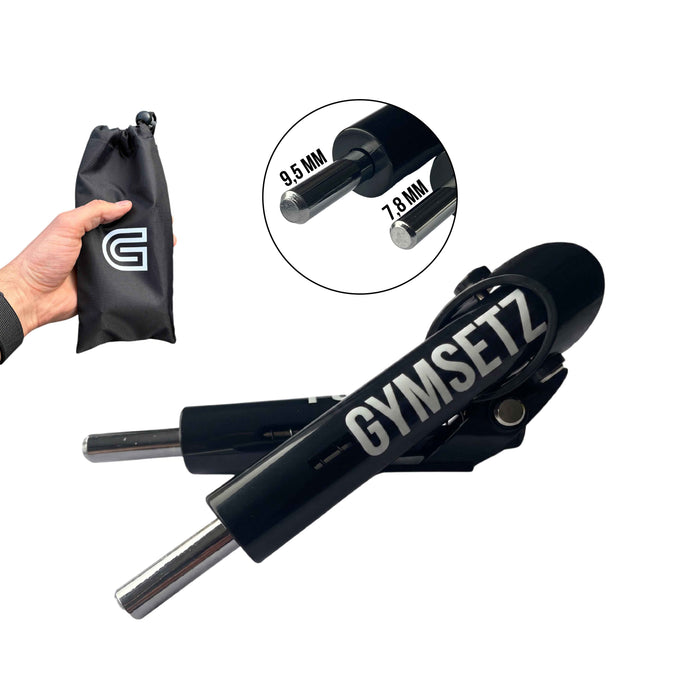
GYM ESSENTIALS SET
€49,00
Everything you need for heavy training, in one set. With the Gym Essentials Set you get the three Gymsetz favourites together and pay €49 instead of...
View productSigns you need a deload
Your strength stalls or drops
Have you missed your usual weights or reps for several sessions in a row, even though your sleep and nutrition are on point? Then accumulated fatigue is a logical explanation.
You feel tired all the time
A hard workout is allowed to be tiring. But if you're already tired when you start your warm-up and your energy stays low for days, that's a sign to ease off.
Your joints and tendons ache
A nagging elbow, wrist or shoulder that keeps coming back is a reason to reduce the load. If pain persists or gets worse, have it checked by a doctor or physiotherapist.
Your motivation is gone
Suddenly dreading workouts you normally enjoy? Mental fatigue counts too. A lighter week can bring back your drive to train.
How often should you schedule a deload week?
There's no fixed rule that works for everyone. Many training programs schedule a deload after every 4 to 8 weeks of hard training. Beginners often recover faster and need a deload less often, because they're still working with relatively light weights. The heavier and more often you train, the more important a planned lighter week becomes.
You can plan a deload in advance or use one as soon as you notice the signs above. Not sure how often you should train per week? Also read how often should you train.
3 ways to structure a deload week
Reduce volume
You keep the weight roughly the same, but do about half your usual number of sets. This is the most common approach, because you keep feeling the heavy weights without building up much fatigue.
Reduce intensity
You do the same number of sets and reps, but with a clearly lower weight. Useful if your joints in particular are asking for rest.
Reduce both volume and intensity
Fewer sets and less weight. This is the lightest option and suits you if you're truly exhausted or just came out of a busy period.
Tip
Skip intensity techniques like dropsets and supersets during your deload week. They're designed to create extra fatigue, and that's exactly what you want to avoid this week. Pick them up again afterwards with your dropset training plan.
Example: what a deload week looks like
Say you normally do 4 sets of 8 reps on the bench press. In a deload week where you reduce volume, it looks like this:
| Exercise | Normal week | Deload week |
|---|---|---|
| Bench press | 4 x 8 | 2 x 8, same weight |
| Squat | 4 x 6 | 2 x 6, same weight |
| Barbell row | 3 x 10 | 2 x 10, same weight |
| Lat pulldown | 3 x 12 | 2 x 12, same weight |
Stop every set well short of failure. After the workout you want to feel like you could have done a lot more. Want to know which weight suits your level? Use the 1RM calculator.
Common mistakes during a deload
- Training heavy anyway: you feel fresh and go for a PR. Save that energy for the week after.
- Not training at all: a deload isn't a vacation. By training light you stay in your rhythm.
- Forgetting recovery: a deload works best when you also sleep well and eat enough. Read more about sleep and muscle growth.
- Deloading too often: if you take a light week every couple of weeks, you won't build enough stimulus to get stronger.
Tip
Use your deload week to review your training log. Check which exercises progressed well and where you got stuck, so your next block is even more focused.
Frequently asked questions about a deload week
Will I lose muscle during a deload week?
No, you don't need to worry about that. You keep training the same exercises, just lighter. One week of lower volume isn't enough to lose the muscle you've built.
Can I take a week off instead of a deload?
You can, for example if you're going on holiday or have been sick. Many lifters do prefer a light training week, because it helps them keep their rhythm and technique.
Should I eat less during a deload?
Usually that's not necessary. Your body is busy recovering and needs food for that. Just stick to your normal eating pattern and protein intake.
Do beginners need a deload week too?
Beginners often need one less quickly, because they still train with lighter weights and recover fast. If you do notice signs of fatigue, a lighter week can make sense for you as well.
Summary
A deload week is a planned lighter training week in which you reduce volume, intensity or both. You often schedule it after several weeks of hard training or as soon as you notice stalling, fatigue or aching joints. That way you recover and can make progress again afterwards. Want a plan where deloads and progression are already worked out for you? Check out the Personal Gym Plan or discover more articles in the Fitness Hub.
Read next
View
Warm-up for strength training: how to prepare for heavy sets
How do you warm up properly for strength training? Learn how to warm up...
View
Training to failure: how close to failure should you train for muscle growth?
Should you take every set to failure? Learn what research says, what RIR means...
View
Rest between sets: how long to rest for muscle growth and strength
How long should you rest between sets? Find the ideal rest time for muscle...
Ready to train stronger?
Discover all guides, programs and tools in the Fitness Hub.