

Walk into an average gym and you'll see two camps: the people at the squat rack and the dumbbells, and the people moving from machine to machine. Online you'll read that "real" muscle growth only comes from free weights, while others swear by the leg press and the cable station. Who's right?
In this article we put machines and free weights side by side. You'll learn what research says about muscle growth and strength, what the pros and cons are, and how to combine both smartly in your program.
What is the difference between machines and free weights?
With free weights you control the path of the weight yourself. Think barbells, dumbbells and kettlebells. Your body has to not only move the weight but also stabilize it.
With machines the movement path is largely fixed. Think leg press, chest press, lat pulldown or a cable station with a weight stack. The machine takes over part of the balancing, so you can focus mainly on the muscle you're training.
What does research say about muscle growth and strength?
A 2023 systematic review and meta-analysis (Haugen and colleagues, published in BMC Sports Science, Medicine and Rehabilitation) compared studies in which people trained with free weights or with machines. The conclusion: for muscle growth there was no clear difference. For strength, the main finding was that you get stronger in the form you train in. Those who trained with free weights scored better on free weight tests, and those who trained on machines scored better on machine tests.
In other words: your muscles respond to tension and effort, not to the logo on the equipment. What counts is training close enough to failure, doing enough sets and improving over time. Also read our article on progressive overload and on how many sets per muscle group per week you need.

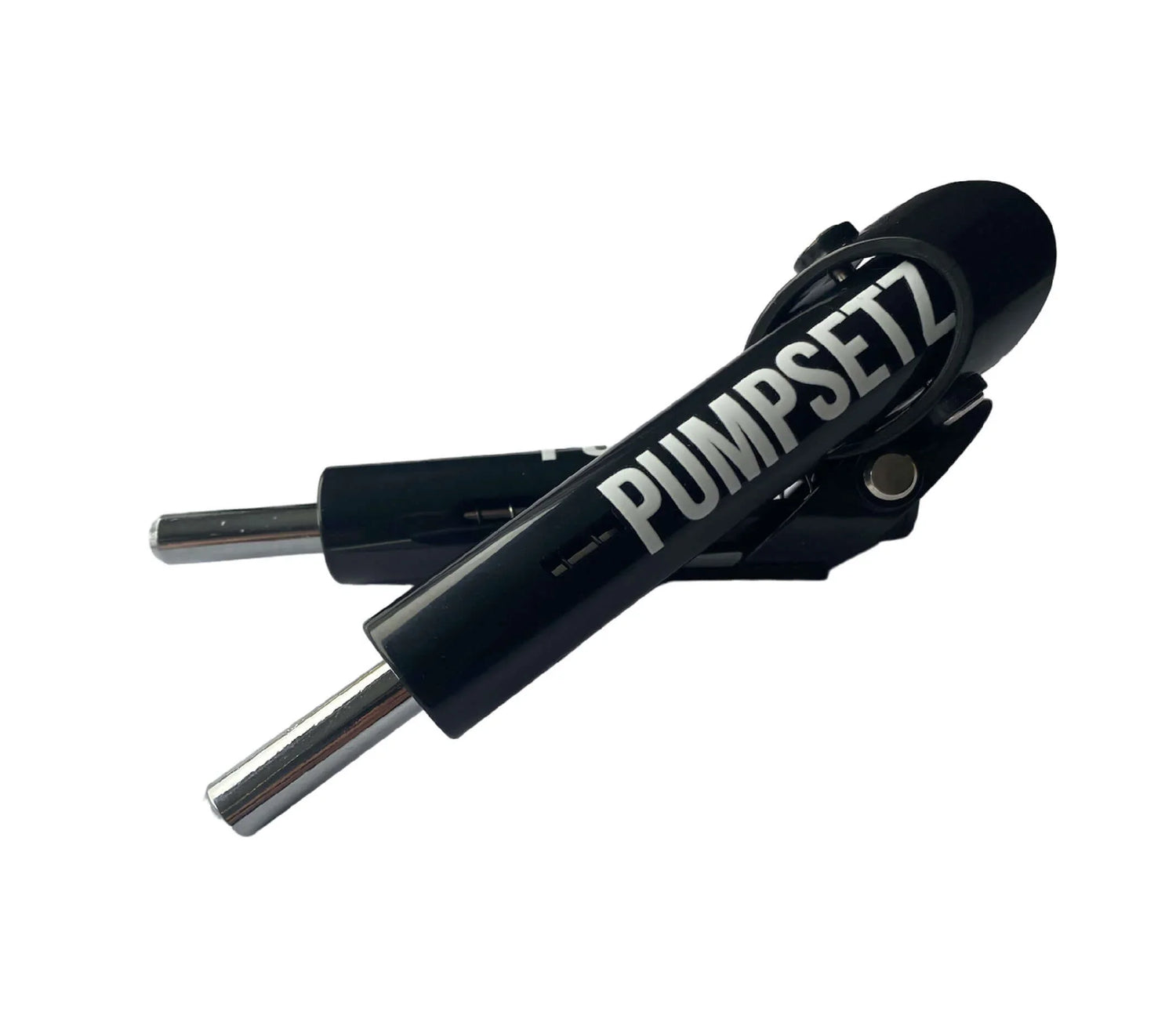
DROPSET PINS
€19,95
Dropsets on machines, without a training partner and without the hassle. With Gymsetz Dropset Pins you drop the weight on cable and stack machines in one...
View productBenefits of machines
Easy to learn
Because the path is fixed, you pick up the technique faster. Ideal if you're just starting out or want to learn to feel a new muscle group.
You can safely train to (near) failure
If a rep won't go up, you simply set the weight back down. You don't need a spotter to finish a heavy set.
Targeted isolation
Machines like the leg extension or the cable fly let you work a muscle without your grip or lower back giving out first.
Quick weight changes
With a pin in the weight stack you adjust the resistance in a few seconds. That makes machines ideal for drop sets.
Benefits of free weights
More muscles work together
In a squat, deadlift or overhead press your whole body has to stabilize. That trains coordination and strength you also use outside the gym.
Freedom of movement
You're not tied to the dimensions of a machine. You choose your own grip, stance and movement path, which is handy if your height differs from what a machine expects.
Available everywhere
You'll find a barbell and a few dumbbells in almost every gym, and you can do a lot with them at home too.
Specific for strength sports
Want to get stronger in the big lifts? Then train those lifts themselves. As the research shows, you mainly get strong at what you practice.
How to combine machines and free weights
For most people the best choice isn't a choice but a combination. A handy rule of thumb: start your workout with a heavy free weight exercise and finish with machines to collect extra volume. Below is an example of a push workout.
| Exercise | Type | Sets | Reps |
|---|---|---|---|
| Bench press | Free weight | 3 | 6 to 8 |
| Dumbbell shoulder press | Free weight | 3 | 8 to 10 |
| Chest press machine | Machine | 3 | 10 to 12 |
| Cable triceps pushdown | Machine | 3 | 10 to 15 |
Rest a bit longer on the heavy exercises than on the machines. In our article on rest time between sets you'll read exactly how long.
Drop sets: where machines really shine
A drop set is a set you take to (near) failure, after which you immediately lower the weight and keep going. With free weights you have to change plates or walk to a lighter dumbbell. On a machine with a weight stack it's much faster, especially with PUMPSETZ Dropset Pins. You set up your lighter weights in advance and switch in one move. Read how it works in how to use a dropset pin. Find exercise ideas in the best drop set exercises per muscle group.
Tip
Do your drop set on the last set of your last machine exercise. That way you get extra volume out of your workout without your heavy exercises at the start suffering.
Frequently asked questions about machines and free weights
Do you build as much muscle with machines as with free weights?
According to the 2023 meta-analysis there's no clear difference for muscle growth, as long as you train hard enough and do enough volume.
Are machines better for beginners?
Machines are easier to learn and therefore a good start. It's still smart to learn basic free weight exercises early on, ideally with guidance.
Can I train on machines only?
Yes, for muscle growth that can work fine. If you want to get stronger in lifts like the squat or deadlift, include those exercises in your program as well.
What if I feel pain during an exercise?
Stop the exercise and choose a variation that feels good. If the pain persists, get advice from a doctor or physiotherapist.
Summary
Machines and free weights are both effective for muscle growth. Free weights are ideal for strength in the big lifts and for stability, machines for safe isolation, easy training to failure and fast drop sets. Combine them: heavy and free at the start, machines and drop sets at the end. Find more tips in the Fitness Hub.
Read next
View
Warm-up for strength training: how to prepare for heavy sets
How do you warm up properly for strength training? Learn how to warm up...
View
Training to failure: how close to failure should you train for muscle growth?
Should you take every set to failure? Learn what research says, what RIR means...
View
Squat technique: how to squat stronger with proper form
Learn proper squat technique step by step: from rack height and stance to breathing,...
Ready to train stronger?
Discover all guides, programs and tools in the Fitness Hub.